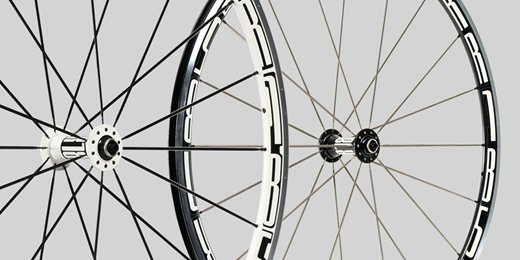
Quick definitions: Cartridge bearings (sealed bearings) are pre-packed, replaceable units. Cup-and-cone bearings (loose-ball) use loose ball bearings between a cup and cone that get cleaned and repacked with grease as routine maintenance.
The type isn't the tell, execution is
Both bearing systems can be built well or poorly. Cup-and-cone hubs, properly maintained, can last decades and are fully serviceable with basic tools. Cartridge bearings offer better out-of-the-box sealing against water and grit and require less hands-on maintenance, but a poor-quality cartridge bearing wears out faster than a good cup-and-cone setup. Neither claim ("sealed is always better" or "cup-and-cone is always more durable") holds up on its own.
What to actually check
- Spin test. Remove the wheel and spin it by hand. It should feel smooth with no notchiness, grinding, or excessive drag. This is the single best signal available before buying.
- Named hub model. Wheelsets that name a specific, established hub (rather than a generic "sealed cartridge bearing hub" description) are generally a safer bet, since the manufacturer is putting a reputation behind a known part.
- Warranty length. Manufacturers confident in hub durability tend to back them with longer warranties. A short or vague warranty on the hub specifically is worth asking about directly.
- Weather exposure. If you ride year-round in wet conditions, hub sealing quality matters more to you than it does to a fair-weather rider, and it's worth paying up for regardless of bearing type.
Pay up for hub quality ifyou ride year-round in wet or gritty conditions, put on high mileage, or don't want to think about bearing maintenance for several seasons.
Don't overspend on hubs ifyou ride fair weather only, put in a modest annual mileage, or are comfortable doing or paying for an annual service, which extends the life of even a modest hub considerably.
Hub load isn't the same for every rider. A heavier rider puts more sustained force through the bearings, especially standing out of the saddle, which shows up as faster wear rather than sudden failure. Seewheels for heavier riders for the specific weight thresholds and spoke-count guidance that matter most above roughly 220 lbs.